


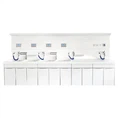
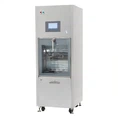
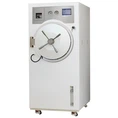
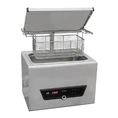
The functions of laboratory and medical cryogenic refrigeration equipment mainly include the following aspects:
Provide a stable low-temperature environment: Cryogenic refrigeration equipment generates a low-temperature environment through refrigeration technology, which can provide a stable low-temperature environment for laboratories and medical equipment to ensure the accuracy of experiments and medical operations. For example, laboratory refrigerators generate low-temperature cold water through refrigeration technology to provide a stable cooling environment for various equipment in the laboratory.
Preserve biological samples and drugs: In terms of biological sample preservation, low-temperature environments help slow down cell metabolism and extend the preservation time of samples. In the medical field, cryogenic equipment is used to preserve biological products such as drugs and vaccines to ensure their effectiveness and safety.

Improve the accuracy and reliability of experimental results: Low-temperature environments play an important role in scientific research. For example, in physics research, low-temperature environments can reduce thermal motion between particles and improve experimental accuracy; in chemical research, low-temperature environments are conducive to reaction control and product separation; in biological research, low-temperature environments help maintain the activity of biological samples.
Versatility: Some cryogenic cooling equipment also has multiple functions such as constant temperature and humidity, humidification, etc., which are suitable for a wider range of experiments and application scenarios. For example, Mini-Cool equipment not only provides low-temperature cooling function, but also has high-precision temperature control system and energy-saving and environmental protection features.
Energy-saving and environmental protection: Modern low-temperature refrigeration equipment adopts efficient energy utilization and environmentally friendly refrigerants to reduce energy consumption and environmental pollution. For example, laboratory refrigerators use advanced refrigeration technology and high-efficiency compressors to achieve efficient and energy-saving refrigeration effects.
Safety and stability: Low-temperature refrigeration equipment is equipped with a variety of safety protection functions, such as high and low voltage protection, current overload protection, etc., to ensure the safety and stability of the equipment during operation. For example, laboratory refrigerators are equipped with microcomputer temperature control systems, which can accurately control water temperature and meet the high-precision temperature requirements of experimental equipment.