


Hey there! As a supplier of lab incubators, I've seen firsthand the wide range of these essential pieces of equipment out there. Lab incubators are super important in various scientific fields, from biology and microbiology to medical research. They create the perfect environment for growing and maintaining cell cultures, microorganisms, and other biological samples. So, let's dive into the different types of lab incubators available.

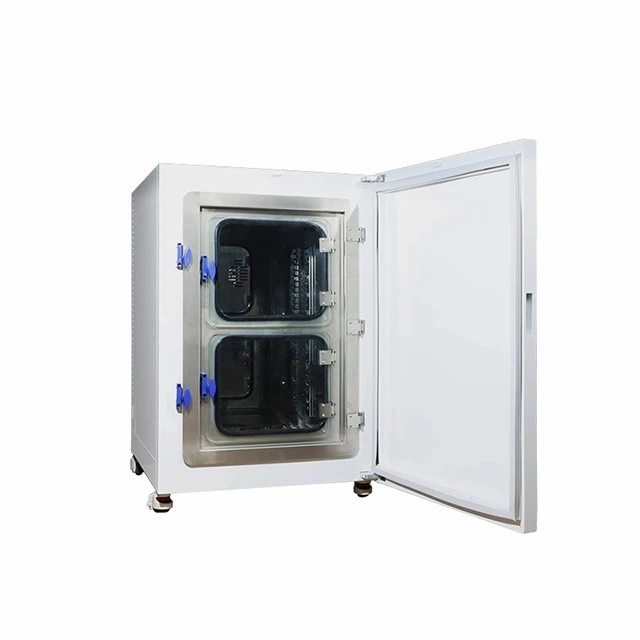
1. Standard Incubators
Standard incubators are the most basic type you'll come across. They're designed to maintain a constant temperature, usually ranging from a few degrees above room temperature to around 60 - 70°C. These incubators are great for general-purpose applications like growing bacteria, fungi, and some cell cultures.
They're pretty straightforward in terms of operation. You set the desired temperature, and the incubator uses a heating element to keep it stable. Some standard incubators also come with a simple fan to ensure even distribution of heat inside the chamber.
If you're looking for a reliable standard incubator, our Desktop Constant Temperature Incubator is a great option. It's compact, easy to use, and provides accurate temperature control for your lab needs.
2. CO2 Incubators
CO2 incubators are a bit more specialized. They're used when you need to control not only the temperature but also the carbon dioxide (CO2) and humidity levels. These conditions are crucial for growing mammalian cell cultures, as they mimic the natural environment inside the body.
The CO2 in the incubator helps maintain the pH of the cell culture medium. Most CO2 incubators maintain a CO2 concentration of around 5%, which is similar to the level in the human body. Humidity is also important to prevent the culture medium from evaporating.
Our CO2 Incubator is equipped with advanced sensors and controls to ensure precise regulation of CO2, temperature, and humidity. It has a double-door design to minimize heat and CO2 loss when you open the door, which helps maintain a stable environment for your precious cell cultures.
3. BOD Incubators
Biochemical Oxygen Demand (BOD) incubators are mainly used in environmental and water quality testing. They're designed to maintain a low temperature, usually around 20°C, for a specific period of time. This low temperature is ideal for measuring the amount of oxygen consumed by microorganisms in a water sample, which is an important indicator of water pollution.
BOD incubators need to be very precise in temperature control because even a small change in temperature can affect the results of the BOD test. They also need to be well-insulated to prevent heat transfer from the outside environment.
4. Shaking Incubators
Shaking incubators combine the functions of an incubator and a shaker. They're used when you need to mix or agitate the samples while they're being incubated. This is especially useful for growing aerobic microorganisms, as the shaking action helps to provide oxygen to the cells.
The shaking speed and amplitude can usually be adjusted according to your specific requirements. Some shaking incubators also come with a programmable timer, so you can set the shaking and incubation time as needed.
5. Multifunctional Incubators
As the name suggests, multifunctional incubators offer a combination of features from different types of incubators. They can be programmed to control temperature, CO2, humidity, and even shaking. This makes them very versatile and suitable for a wide range of applications.
Our Multifunctional Incubators are a great choice if you need a single piece of equipment that can handle multiple tasks. They're equipped with a user-friendly touchscreen interface, which allows you to easily set and monitor all the parameters.
Choosing the Right Incubator for Your Lab
When choosing a lab incubator, there are several factors you need to consider. First of all, think about the type of samples you'll be working with. If you're growing mammalian cell cultures, a CO2 incubator is a must. If you're doing general microbiology work, a standard incubator might be sufficient.
The size of the incubator is also important. You need to make sure it has enough space to accommodate all your samples. Consider the available space in your lab as well. If you have limited space, a desktop incubator might be a better option.
Another factor to consider is the level of control and accuracy you need. Some applications require very precise temperature, CO2, and humidity control, while others can tolerate a bit of variation.
Finally, think about your budget. Incubators can vary widely in price, depending on their features and capabilities. Make sure you choose an incubator that meets your needs without breaking the bank.
Why Choose Our Lab Incubators
We've been in the business of supplying lab incubators for many years, and we take pride in offering high-quality products at competitive prices. Our incubators are made with the latest technology and are built to last.
We also provide excellent customer service. Our team of experts is always ready to help you choose the right incubator for your lab and to answer any questions you might have. We offer installation, training, and maintenance services to ensure that your incubator works properly and efficiently.
If you're interested in our lab incubators or have any questions, don't hesitate to get in touch with us. We'd love to discuss your specific requirements and help you find the perfect incubator for your lab. Whether you're a small research lab or a large pharmaceutical company, we have the right solution for you.
References
- Atlas, R. M., & Bartha, R. (1998). Microbial Ecology: Fundamentals and Applications. Benjamin Cummings.
- Freshney, R. I. (2010). Culture of Animal Cells: A Manual of Basic Technique and Specialized Applications. Wiley-Blackwell.
- Pelczar, M. J., Chan, E. C. S., & Krieg, N. R. (1993). Microbiology: Concepts and Applications. McGraw-Hill.