


What is the difference between a pilot - scale freeze dryer and a production - scale freeze dryer?
As a freeze dryer supplier, I often encounter customers who are confused about the differences between pilot - scale freeze dryers and production - scale freeze dryers. In this blog post, I will delve into the key aspects that set these two types of freeze dryers apart.
1. Capacity and Throughput
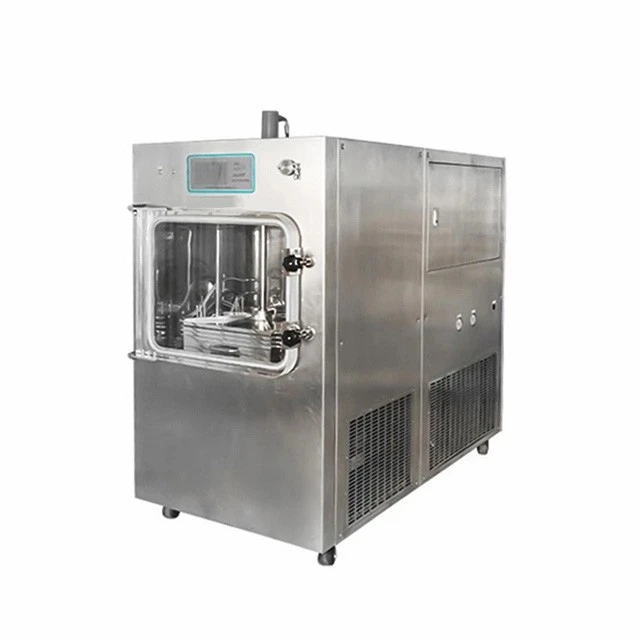
The most obvious difference between pilot - scale and production - scale freeze dryers lies in their capacity and throughput. A pilot - scale freeze dryer, such as the Pilot Freeze Dryer, is designed for small - scale experiments, product development, and process optimization. It typically has a relatively small drying chamber and can handle a limited amount of samples at a time. For example, a pilot - scale freeze dryer may have a shelf area ranging from 0.1 to 2 square meters, and it can process a few kilograms of products per batch.
On the other hand, production - scale freeze dryers are built for large - scale manufacturing. They are capable of handling a much larger volume of products to meet the high - demand production requirements. A production - scale freeze dryer can have a shelf area of 5 square meters or more, and it can process tens or even hundreds of kilograms of products in a single batch. This high throughput is essential for industries such as pharmaceuticals, food, and biotechnology, where large quantities of freeze - dried products need to be produced on a regular basis.
2. Cost
Cost is another significant factor that differentiates pilot - scale and production - scale freeze dryers. Pilot - scale freeze dryers are generally more affordable. The lower cost is mainly due to their smaller size, simpler design, and lower production capacity. They are a cost - effective option for research institutions, small - scale manufacturers, and startups that are in the early stages of product development. These companies can use pilot - scale freeze dryers to test different formulations, optimize the freeze - drying process, and evaluate the market demand for their products without making a large financial investment.
In contrast, production - scale freeze dryers are much more expensive. The high cost is associated with their large size, complex engineering, advanced control systems, and high - end components. Additionally, the installation, commissioning, and maintenance of production - scale freeze dryers also require significant financial resources. However, for large - scale manufacturers, the investment in a production - scale freeze dryer is justified by the high production volume and the potential for long - term cost savings through economies of scale.
3. Flexibility
Pilot - scale freeze dryers offer a high degree of flexibility. They can be easily adjusted to accommodate different types of products, sample sizes, and freeze - drying processes. Researchers and product developers can quickly change the operating parameters, such as temperature, pressure, and drying time, to optimize the freeze - drying process for a specific product. This flexibility allows for rapid prototyping and process development, enabling companies to bring new products to the market more quickly.

Production - scale freeze dryers, while less flexible than pilot - scale ones, are designed for consistent and reproducible production. Once the freeze - drying process is optimized on a pilot - scale unit, it can be scaled up to a production - scale freeze dryer. However, any changes to the production - scale process need to be carefully evaluated and validated to ensure product quality and compliance with regulatory requirements. This is because large - scale production requires a high level of stability and predictability to meet the market demand and maintain product consistency.
4. Automation and Control
In terms of automation and control, both pilot - scale and production - scale freeze dryers have advanced systems, but there are some differences. Pilot - scale freeze dryers usually have a relatively simple control system that allows operators to manually adjust the process parameters. This simplicity is suitable for research and development purposes, where operators need to have more hands - on control over the process to understand the effects of different variables on the freeze - drying outcome.
Production - scale freeze dryers, on the other hand, are highly automated. They are equipped with sophisticated control systems that can precisely monitor and adjust all aspects of the freeze - drying process, including temperature, pressure, vacuum, and shelf movement. These automated systems ensure consistent product quality, reduce human error, and improve production efficiency. For example, in the pharmaceutical industry, production - scale freeze dryers are often integrated with a computerized control system that can record and store all process data for quality control and regulatory compliance purposes.
5. Regulatory Requirements
Regulatory requirements also vary between pilot - scale and production - scale freeze dryers. Pilot - scale freeze dryers used in research and development are generally subject to less stringent regulatory requirements. Since they are mainly used for experimental purposes, the focus is more on obtaining reliable data and developing effective processes rather than strict compliance with production - related regulations.
However, production - scale freeze dryers, especially those used in the pharmaceutical and food industries, are subject to strict regulatory scrutiny. These industries are highly regulated to ensure product safety, quality, and efficacy. Production - scale freeze dryers need to comply with various international standards and regulations, such as Good Manufacturing Practice (GMP) in the pharmaceutical industry. Manufacturers must ensure that the equipment is designed, installed, and operated in accordance with these regulations, which often require extensive documentation, validation, and quality control procedures.
6. Design and Construction
The design and construction of pilot - scale and production - scale freeze dryers also differ. Pilot - scale freeze dryers are often more compact and portable. They are designed to be easily installed in laboratories or small production facilities with limited space. The construction materials used in pilot - scale freeze dryers are usually of good quality but may not be as high - end as those used in production - scale units.
Production - scale freeze dryers are built with a more robust and durable design. They are typically large, fixed - installation units that require a dedicated production area. The construction materials are carefully selected to meet the strict hygiene and quality requirements of the production environment. For example, in the pharmaceutical industry, production - scale freeze dryers are often made of high - grade stainless steel to prevent corrosion and ensure product purity.
Conclusion
In conclusion, pilot - scale and production - scale freeze dryers have distinct characteristics that make them suitable for different applications. Pilot - scale freeze dryers are ideal for research, development, and small - scale production, offering flexibility, affordability, and ease of use. Production - scale freeze dryers, on the other hand, are designed for large - scale manufacturing, providing high capacity, automation, and compliance with strict regulatory requirements.
If you are in the process of choosing a freeze dryer for your business, it is crucial to carefully consider your specific needs, including production volume, product type, budget, and regulatory requirements. Whether you are looking for a Pilot Freeze Dryer for product development or a Freeze Dryer For Pharmaceuticals for large - scale production, our company can provide you with high - quality solutions. We have a wide range of freeze dryers, including Vertical Freeze Dryer, to meet your diverse needs.
If you are interested in learning more about our freeze dryers or have any questions regarding the selection of the right equipment for your application, please feel free to contact us for a consultation. Our team of experts is ready to assist you in making the best decision for your business.
References
- "Freeze Drying Technology: Principles and Practice" by M. J. Pikal and S. Roy.
- "Pharmaceutical Freeze Drying: An Introduction" by G. M. Wallack.
- Industry reports on freeze dryer market trends and applications.