



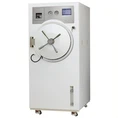


Hey there! As a supplier of centrifuges, I often get asked if these nifty machines can be used in the pharmaceutical industry. Well, the short answer is a resounding yes! In this blog, I'll break down how centrifuges play a crucial role in the world of pharmaceuticals, and I'll also introduce you to some of the centrifuge products we offer.
First off, let's talk about what centrifuges actually do. At their core, centrifuges work by spinning samples at high speeds, creating a centrifugal force. This force separates different components of a sample based on their density. Think of it like a super - fast version of letting a mixture settle on its own, but way more efficient.
In the pharmaceutical industry, this separation ability is a game - changer. One of the primary applications is in the purification of drugs. During the drug manufacturing process, raw materials often come as mixtures. Centrifuges can separate the active pharmaceutical ingredients (APIs) from other substances like impurities, solvents, or by - products. This is crucial because the purity of a drug directly affects its safety and efficacy. For example, in the production of antibiotics, centrifuges can help isolate the pure antibiotic compound from the fermentation broth, ensuring that patients get a clean and effective dose.
Another important use is in the analysis of biological samples. Pharmaceutical companies frequently need to study the components of blood, urine, or other biological fluids to understand how drugs interact with the human body. Centrifuges can separate blood into its different components, such as red blood cells, white blood cells, and plasma. This separation allows researchers to analyze each component independently, which is essential for drug development and quality control.
Now, let's take a look at some of the centrifuge products we offer that are well - suited for the pharmaceutical industry.
Our Table Top Low Speed Centrifuge is a great option for smaller - scale pharmaceutical labs. It's compact, easy to use, and can handle a variety of sample sizes. This centrifuge is perfect for routine separations, like separating small volumes of blood or other biological samples. It operates at relatively low speeds, which is ideal for samples that are sensitive to high - speed forces.
If you're looking for something even more compact and portable, our Mini Centrifuges are the way to go. These little powerhouses are great for quick spins of small samples, such as microtubes. They're often used in research settings where space is limited, but you still need reliable centrifugation.
For more heavy - duty applications, our Medical Centrifuge is a top choice. It's designed to handle larger volumes and can operate at higher speeds. This makes it suitable for large - scale drug production and more complex separations. It's also built with safety features to ensure the well - being of operators, which is a must in a pharmaceutical environment.
In addition to these specific products, centrifuges in the pharmaceutical industry need to meet certain standards. They must be made of high - quality materials that are resistant to corrosion from chemicals used in the drug manufacturing process. They also need to be easy to clean and maintain to prevent cross - contamination between different samples.
Centrifuges also play a role in the development of new drug delivery systems. For example, in the creation of liposomes, which are tiny vesicles that can carry drugs to specific parts of the body. Centrifuges can be used to separate and purify liposomes, ensuring that they are of the right size and quality for effective drug delivery.
When it comes to quality control in the pharmaceutical industry, centrifuges are indispensable. They can be used to test the stability of drug formulations. By subjecting samples to centrifugal forces, manufacturers can simulate the effects of long - term storage and transportation. This helps them identify any potential issues, such as sedimentation or phase separation, before the drugs reach the market.
Moreover, in the field of biopharmaceuticals, where drugs are produced using living organisms, centrifuges are used in the harvesting and purification of proteins. Proteins are often the active ingredients in biologic drugs, and centrifuges can separate them from the cell culture medium, ensuring that the final product is pure and potent.
Now, if you're in the pharmaceutical industry and are thinking about adding centrifuges to your lab or production line, we're here to help. Our team of experts can provide you with all the information you need about our products, including technical specifications, pricing, and after - sales support. Whether you're a small research lab or a large - scale pharmaceutical manufacturer, we have the right centrifuge solution for you.


If you're interested in learning more about our centrifuges or want to discuss your specific requirements, don't hesitate to reach out. We're always happy to have a chat and see how we can help you improve your pharmaceutical processes with our high - quality centrifuges.
In conclusion, centrifuges are an essential tool in the pharmaceutical industry. From drug purification and analysis to quality control and the development of new drug delivery systems, their applications are vast and varied. And with our range of centrifuge products, you can find the perfect fit for your pharmaceutical needs. So, if you're in the market for a reliable centrifuge, give us a shout, and let's start a conversation about how we can work together.
References
- "Centrifugation in the Pharmaceutical Industry: Principles and Applications" - A textbook on the use of centrifuges in pharmaceutical manufacturing.
- "Biopharmaceutical Production Technology" - A resource that details the role of centrifuges in biopharmaceutical processes.